mantle plume wikipedia - EAS
 See more
 See all on WikipediaSECUREen.wikipedia.org/wiki/Mantle_plume
A mantle plume is a proposed mechanism of convection within the Earth's mantle. Because the plume head partially melts on reaching shallow depths, a plume is often invoked as the cause of volcanic hotspots, such as Hawaii or Iceland, and large igneous provinces such as the Deccan and
...
See moreMantle plumes were first proposed by J. Tuzo Wilson in 1963 and further developed by W. Jason Morgan in 1971 and 1972. A mantle plume is posited to exist where super-heated material forms (nucleates) at the core-mantle boundary
...
See more
Mantle plumes have been suggested as the source for flood basalts. These extremely rapid, large scale eruptions of basaltic magmas have periodically formed continental flood basalt
...
See moreThe most prominent thermal contrast known to exist in the deep (1000 km) mantle is at the core-mantle boundary at 2900 km. Mantle plumes
...
See moreSome common and basic lines of evidence cited in support of the theory are linear volcanic chains, noble gases, geophysical anomalies,
...
See moreIn parallel with the mantle plume model, two alternative explanations for the observed phenomena have been considered: the plate
...
See more• Delamination (geology) – Loss of the portion of the lowermost lithosphere from the tectonic plate to which it was attached
• Epeirogenic movement – Upheavals or depressions of land...
See moreWikipedia text under CC-BY-SA license- SECUREen.wikipedia.org/wiki/Talk:Mantle_plume
- What is the speed of convection within a plume? With it being mainly solid matter under great pressure, pretty slow I imagine, but do the plumes rise at 1cm a year or 1 cm in 1000 years? Northfold 11:51, 7 September 2007 (UTC)[reply]
- (Rated B-class, Mid-importance): WikiProject …
- People also ask
- SECUREen.wikipedia.org/wiki/Plume_tectonics
Plume tectonics is a geoscientific theory that finds its roots in the mantle doming concept which was especially popular during the 1930s and initially did not accept major plate movements and continental drifting. It has survived from the 1970s until today in various forms and presentations. It has slowly evolved into a concept that recognises and accepts large-scale plate motions such as envisaged by plate tectonics, but placing them in a framework where large mantle plumes are t…
Wikipedia · Text under CC-BY-SA license- Estimated Reading Time: 3 mins
- SECUREwww.sciencedaily.com/terms/mantle_plume.htm
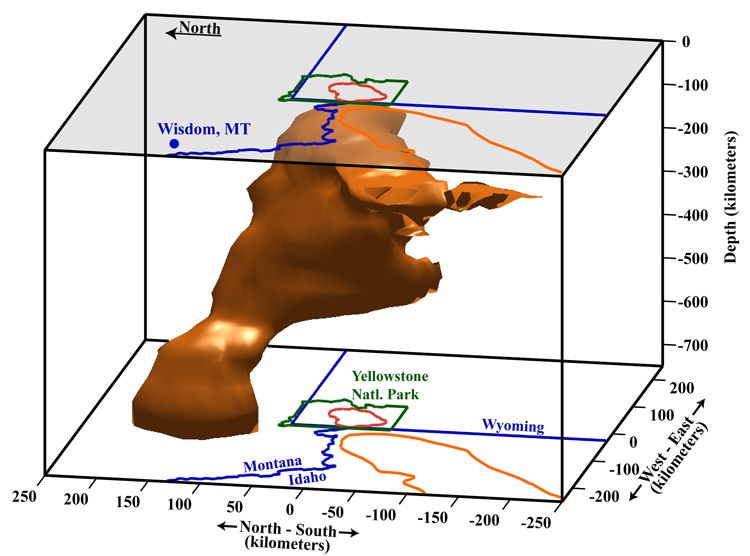
Oct 17, 2019 · They discovered a flow of hot rocks, known as a mantle plume, rising from the core-mantle boundary beneath central ... Insights Into the Yellowstone Hotspot Jan. 7, 2021 — The Yellowstone hotspot...
- SECUREen.wikipedia.org/wiki/Plume
Mantle plume, an upwelling of hot rock within the Earth's mantle that can cause volcanic hotspots Moisture plume, an alternative name for a atmospheric river, a narrow corridor of concentrated moisture in the atmosphere Plumage, the layer of feathers that cover a bird Media and literature
- Estimated Reading Time: 1 min
- SECUREen.wikipedia.org/wiki/Iceland_hotspot
Mantle plume theory The Iceland plume is a postulated upwelling of anomalously hot rock in the Earth's mantle beneath Iceland. Its origin is thought to lie deep in the mantle, perhaps at the boundary between the core and the mantle at approximately 2,880 km depth. Opinions differ as to whether seismic studies have imaged such a structure.
- SECUREen.wikipedia.org/wiki/Mantle
Mantle (mollusc), a layer of tissue in molluscs which secretes the shell; Fireplace mantle or mantel, the hood over the grate of a fire; Gas mantle, a device for generating bright white light when heated by a flame; Mantle Site, Wendat (Huron) Ancestral Village, in Whitchurch-Stouffville, near Toronto; Mantle (API), a low-level GPU API developed by AMD
Do plumes exist?
www.mantleplumes.orgNew Wikipedia page established: Plate theory (volcanism) - Wikipedia. Accretionary-Style Plate Tectonics Explains the Preserved Geological Record Through Time, Including the Eoarchean. ... is an elegant and unusual demonstration that paleontology can contribute to the mantle plumes debate. It is interesting to reflect that paleontology also ...
- SECUREen.wikipedia.org/wiki/Deccan_Traps
It consists of numerous layers of solidified flood basalt that together are more than about 2,000 metres (6,600 ft) thick, cover an area of about 500,000 square kilometres (200,000 sq mi), [2] and have a volume of about 1,000,000 cubic kilometres (200,000 cu mi). [3]
- SECUREen.wikipedia.org/wiki/Siberian_Traps
It has been suggested that, as the Earth's lithospheric plates moved over the mantle plume (the Iceland plume), the plume produced the Siberian Traps in the Permian and Triassic periods, after earlier producing the Viluy Traps to the east, and later going on to produce volcanic activity on the floor of the Arctic Ocean in the Jurassic and Cretaceous, and then generating volcanic activity …
- Some results have been removed